20 great tips and tricks for food startups
For three days, the Food & Beverage Innovators Online Summit provided an enormous amount of information for founders from the food industry in over 40 video contributions. The topics discussed there could fill entire books. We have filtered out a number of tips and tricks from them, which newcomers in particular should know.
Insa Horsch has years of experience in the food industry, manages the startup consultancy Pahnke Open Kitchen and has ten excellent advices for young companies in their first year:
- Define your market position. Make it clear, who your target group is and in which market segment you want to position yourself. Do not only orientate yourself towards hip and trendy shops, but also towards simple supermarkets in a small town. For the survey of potential customers we recommend a questionnaire, then friends and family members can also answer as neutrally as possible.
- Define your distribution channel. The retail trade may be the Champions League, but the competition is correspondingly tough. Getting in is hard enough, staying in is even harder. A new product quickly ends up on what’s called a „hit-bum-list“ in the „bum“ category.
An insider tip from Insa: Try a weekly market for the start, where you will get immediate feedback from customers. - Talk about your product. Many founders share one fear: the theft of ideas. True, a product can be copied relatively easily, but there is almost always much more behind a good brand. So talk about your idea, even with supposed competitors. Maybe you will even become partners, for example in joint production.
- Be open. When you found a startup, you embark on an exciting journey. Curiosity, flexibility, willingness to experiment and the willingness to change direction are required. Those who are not quite sure of their goals should literally sketch them out. Visualization helps!
- Don’t be perfect. The Pareto principle states that 80% of the results are achieved with 20% of the total effort. Now 80% is quite a lot for a startup. So set priorities and find out, if you really need the remaining 20% to perfection or if you can use your time more effectively.
- Dose your social media appearances correctly. Especially in the food sector, the use of social media like Instagram is useful and important. Therefore, build up your reach strategically and don’t blow your best ideas right at the beginning, when the number of followers is still low.
- Think big. Almost every food startup is initially a manufactory and some don’t want to go beyond this status. But if your goal is a food retail business with hundreds of stores, you should take this into consideration in your plans right from the start. Investors also like that.
- Hire good staff. What investors also like are competent and well-coordinated teams. So don’t skimp on your employees. The same applies to salaries.
- Get your pitch deck on point. A good pitchdeck doesn’t have to have more than ten pages. You can put all the important facts and figures there and make hungry for more. If this works, investors and other interested parties will certainly want to know more and ask questions.
- Reward yourselves. Founding is hard work. Don’t overdo it, take time off, ask for help when you’re in trouble and treat yourself when things are going well. It doesn’t have to be a Porsche, but founders deserve fair pay, too.
Health Claim and Novel Food: The right way to do things
Many of the tips mentioned are valid for startups of all kinds, but in the food industry there are even more challenges. Bastian Schmidt-Vollmer of ZENK Rechtsanwälte had a lot to say about food law. We picked out two central topics:
- Health Claims Regulation. Advertising lives from presenting products as positively as possible. One way is to use slogans like „XYZ is good for your health!“ Whether such a statement is permissible or not is regulated by Regulation (EC) No 1924/2006 of the European Parliament, also known as the Health Claims Regulation. According to this regulation, certain claims about products are only allowed, if they can be scientifically proven. It is clear that there are grey areas involved. Some companies deliberately go into the market with controversial advertising messages in order to attract more attention. In doing so, they risk at least a temporary injunction and a temporary withdrawal from the market. This and the re-entry can cause high costs and drag on for months. Startups cannot afford either of these and should therefore legally secure their advertising promises in advance.
- Novel food. This keyword also stands for an EU regulation. It applies to all foods, that were not used for human consumption to any significant extent in the European Union before 15 May 1997. The „significant extent“ is, of course, open to debate. The fact is, for example, that many products, that founders discover when travelling outside Europe, are covered by the regulation. In order to be able to sell them anyway, a complex approval procedure with proof of harmlessness is necessary.
How selo turned a failure into a success
One startup that had to deal with the problem of novel food, is selo from Berlin. Its founder, Laura Zumbaum, started in 2015 with her lemonade made from the coffee cherry. The coffee cherry, a waste product of the coffee harvest, was not originally on the list of the regulation. When it was subsequently classified as a novel food, Laura had to stop selling her soft drink. She waived the approval procedure and completely changed her setting. Instead of relying solely on the gastronomy sector, as before, she now also focused on the retail trade as a distribution channel and used the green, unroasted coffee bean as the raw material. With success, only six months passed from receiving the yellow letter with the sales ban to the shelf placement of the new drink.
Tips on financial planning for retail sales
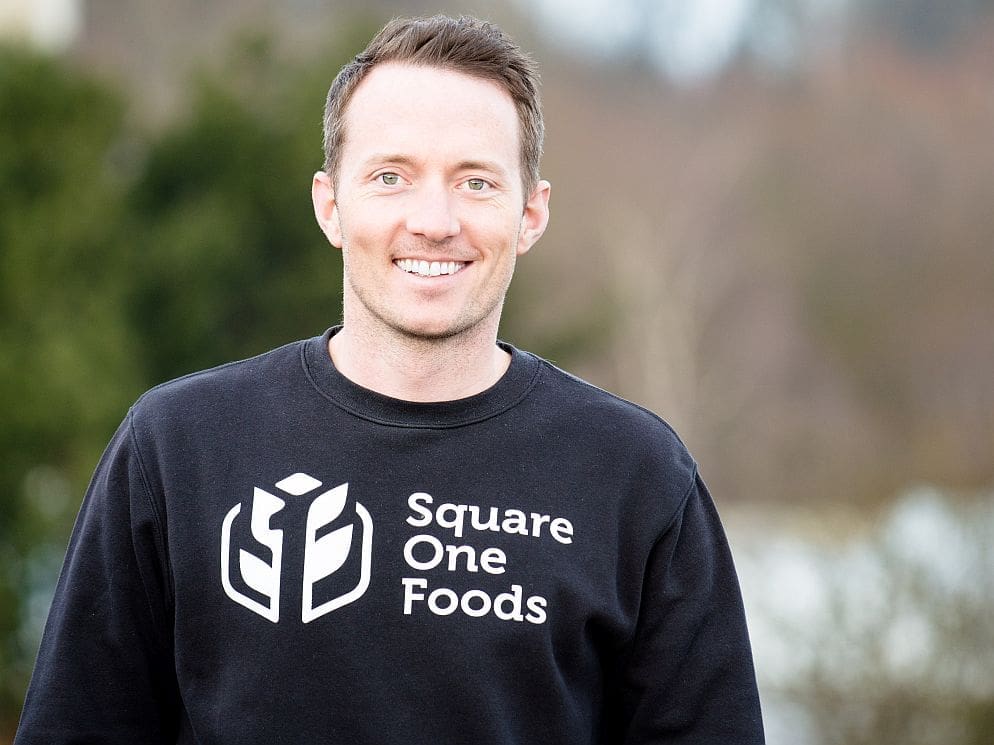
Michael Goblirsch has listed the costs a startup can expect to incur in connection with distribution via the retail trade. He is a partner at the venture capitalist Square One Foods and these are his most important tips:
- Creat a turnover and cost planning. Try to make a as realistic as possible prediction of the most likely costs and sales for the next two years. If the bottom line is not a positive result, you will have to readjust.
- Get a clearance certificate. This will ensure, that your products can be sold in retail outlets. Michael estimates the costs for this to be between 300 and 500 euros per item. On top of that, there are up to 200 euros each for a label check.
- Exhibit on commodity exchanges. Commodity exchanges are a good opportunity for startups to introduce themselves to buyers from the retail sector. With the participation fee and the costs for stand equipment and personnel, up to 5,000 euros can be spent.
- Checks with display advertising. The risk of being overlooked on the shelf as a new product is high. Display advertising with stand-up displays in clearly visible places in the supermarket can help. Michael estimates the cost of producing and equipping such a display at around 50 euros per copy.
- Be careful at the price negotiations. A product has many prices: purchase price, sale price, net price, and so on. Take all factors into account in your calculations, i.e. taxes, rebates, discounts and special conditions and make sure that you can still make reasonable profits in the end. When negotiating prices, don’t argue too much about your costs, but more about the special quality and distinctiveness of your goods.
- Organize your field force. If you want to gain a permanent foothold in the retail trade, you need an efficient sales force. This is, of course, associated with high costs for personnel and mobility (a company car), which startups cannot always afford. One alternative is to use agencies, that take care of this. It may also be possible for several startups to join forces and set up a joint sales force.
- In case of mandatory deposit: reusable or disposable? Most beverages are subject to mandatory deposits and, for sustainability reasons alone, recyclable bottles seem to be the better solution. However, it is also the more expensive solution. The production and provision of suitable bottles and crates can quickly swallow up a six-figure sum.
- Create a financial buffer. Months often pass between the production of a product and its sale, depending on its shelf life. So you can always expect financial dry spells, for which you should have provided a reserve.
Featured Image: Pixabay